
English
Haywards Farm School English
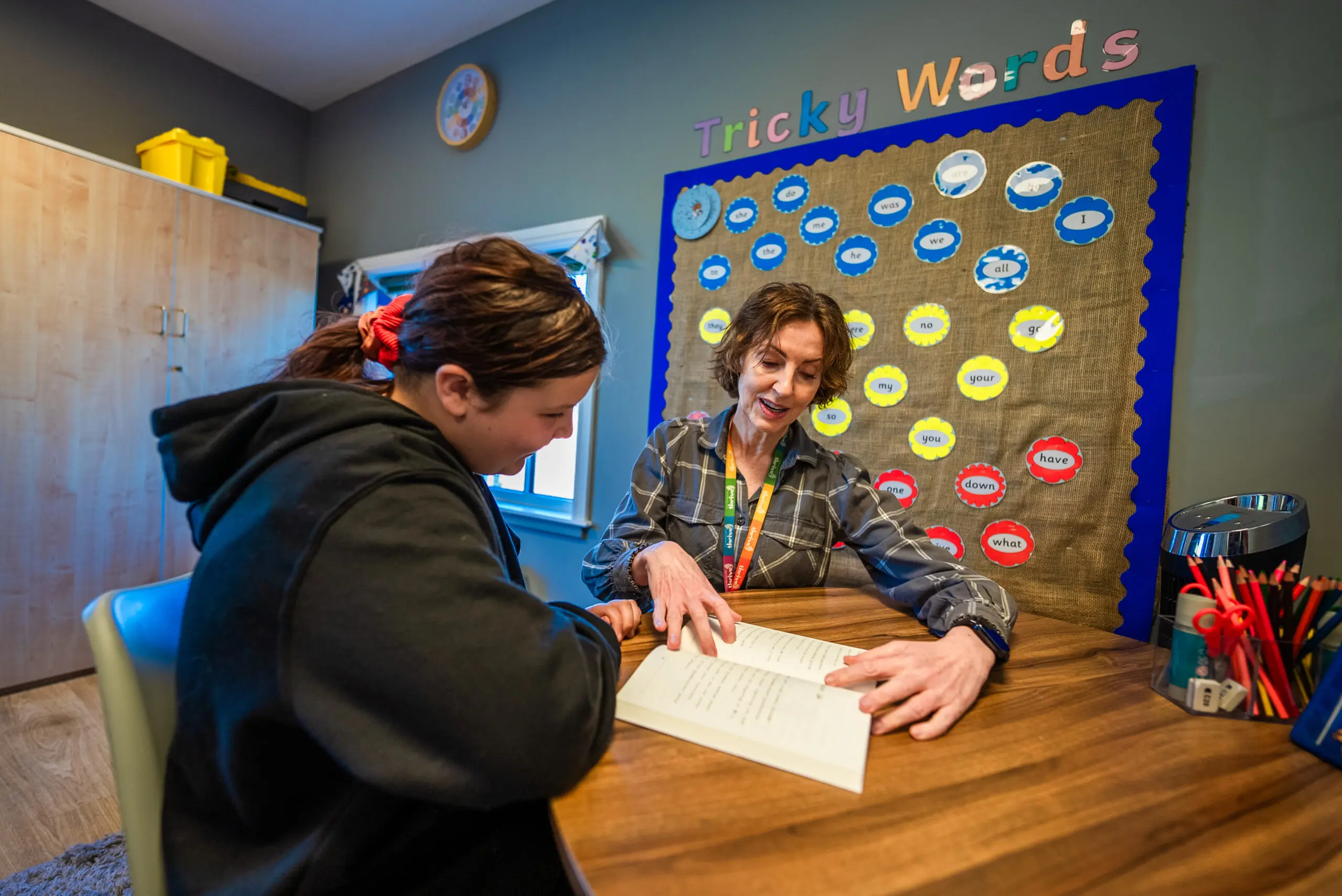
English is the teaching of reading, writing, speaking, listening and grammar. At Haywards Farm School, all pupils have timetabled sessions to develop these key skills. English enables pupils to communicate effectively at home, school and in the wider world, leading to improved life skills and wider opportunities. An understanding of how language is the vehicle for communication in both oral and written forms is paramount in our thinking and planning. To become literate, children need to understand that writing is a representation of speech, and that both come in a variety of forms linked to purpose. Our delivery of the English curriculum is based upon fundamental evidence-based action research.
What Else Haywards Farm Does…
The school has exciting and stimulating literature, and staff are dedicated to ensuring that our children are excited by text.
The school recognises that some of our students struggle with communication, speech and language which is why we are dedicated to supporting students in an inclusive manner and a non-pressure environment. Outside the classroom at our farm, our vision is supported and these skills, such as communicating, being able to give and follow instructions and allowing others to have a voice and an option encouraged and role modelled, which enables students to build confidence and transfer into the school and the wider community.

Haywards Farm School Uses Vipers, What Are Vipers?
VIPERS is an acronym to aid the recall of the 6 reading domains as part of the UK’s reading curriculum. They are the key areas which we feel children need to know and understand in order to improve their comprehension of texts.
Vipers Stands For:
Vocabulary
Inference
Prediction
Explanation
Retrieval
Sequence or Summarise
The 6 domains focus on the comprehension aspect of reading and not the mechanics: decoding, fluency, prosody etc. As such, VIPERS is not a reading scheme but rather a method of ensuring that teachers ask, and students are familiar with, a range of questions. They allow the teacher to track the type of questions asked and the children’s responses to these which allows for targeted questioning afterwards.
Curriculum Intent
The curriculum provides a carefully sequenced journey through high-quality texts that reflect a range of voices, cultures and perspectives. It ensures pupils learn to read for meaning, write for purpose and audience, and speak and listen with confidence and empathy.
English at Haywards Farm School is taught through a “Depth not Breadth” model. Pupils spend longer exploring fewer, carefully chosen units so that they can secure core knowledge and vocabulary before extending their learning. Each unit builds cumulatively towards the analytical and evaluative skills required for AQA English Literature, ensuring ambition while maintaining accessibility for all SEN learners.
Our sequence is aligned with Oak National Academy 2025–2026, providing national consistency and rigour. Every Oak unit is adapted for our learners through simplified language, visual scaffolds and therapeutic pacing. The curriculum promotes Haywards Farm School’s Golden Threads: Identity, Empathy, Power, Change and Morality — which connect reading, writing and oracy across key stages.

Implementation
English is delivered through a structured sequence of lessons which combine Oak Academy resources, explicit vocabulary teaching and consistent SEN scaffolds.

Curriculum Sequencing: Units move logically from foundational narrative and poetry in KS3 to analytical and comparative work in KS4. Texts such as Myths and Legends, A Midsummer Night’s Dream and Wonder prepare pupils for deeper study of An Inspector Calls, A Christmas Carol, Macbeth and Power and Conflict Poetry.
SEN Adaptation: All lessons are differentiated using B² (Bsquared) learning outcomes for Reading, Writing and Speaking and Listening. Visual cues, sentence stems, keyword banks and oral rehearsal support access for all learners.
Pedagogical Approach – Rose and Shine: Teaching follows the Haywards Farm School “Rose and Shine” cycle — a consistent framework used across the curriculum to support clarity, retrieval and independence.
1. Revisit – recall prior learning through quick retrieval and discussion.
2. Observe – teacher models and demonstrates new skills or knowledge.
3. Support – guided practice with scaffolds and peer collaboration.
4. Extend – independent application and challenge in writing or discussion.
5. Shine – celebrate learning, share outcomes and reflect on progress.
This approach ensures secure understanding and builds confidence before new learning is introduced.
Cross-Curricular and Therapeutic Links: English is reinforced through PSHE, Thrive and Forest School experiences which offer real contexts for empathy and communication — such as performing Shakespeare outdoors or linking creative writing to emotional regulation.
Stable Futures Provision: The Stable Futures and Paddocks provision complements the classroom curriculum by providing a therapeutic outdoor environment for pupils who find collaborative work challenging. In this space, students build the communication, teamwork and resilience skills needed to engage successfully with others. Activities are deliberately structured to create carefully navigated opportunities for collaboration, offering quick wins of success that restore confidence and strengthen readiness for classroom participation. Literacy and storytelling are woven into these sessions to ensure continuity with the English curriculum.
Literacy Across the Curriculum: English leads whole-school literacy through reading interventions, vocabulary enrichment and modelling of high-quality writing in every subject.
Professional Collaboration: Teachers and support staff co-plan using shared Oak-based templates and regularly moderate writing and reading evidence to ensure consistency and accuracy.
Impact
The impact of the English curriculum is measured through academic progress, engagement and personal development. Evidence is gathered through B² data, formative assessment, retrieval quizzes and observation of confidence and participation.
As A Result Of This Curriculum, Pupils:

Read with fluency and comprehension, showing curiosity and perseverance when approaching complex texts.
Write with clarity, structure and purpose, using accurate grammar and vocabulary to convey ideas.
Speak and Listen with confidence, respect and empathy in both formal and informal settings.
Understand how literature reflects social and moral themes, connecting their learning to personal experiences and wider world issues.
Demonstrate readiness for accreditation through AQA English Literature or Functional Skills pathways.
Through the “Rose and Shine” approach supported by the Stable Futures and therapeutic enrichment programmes pupils not only make measurable academic progress but also grow in confidence, empathy and self-expression. They leave Northcroft School equipped with the communication skills to succeed in learning, relationships and life.
Contact Us Today, We Are Welcoming Of All Queries And Available To Provide Information Relating To Our School.
For all general enquiries please contact the main office where a member of our Reception staff will be able to put you in contact with the right person.
